One-pot Korean Beef Mince & Rice Bowls for Busy Nights
Fast weeknight comfort: savory gochujang beef, fluffy rice, and veggies cook together in one pan for minimal cleanup.
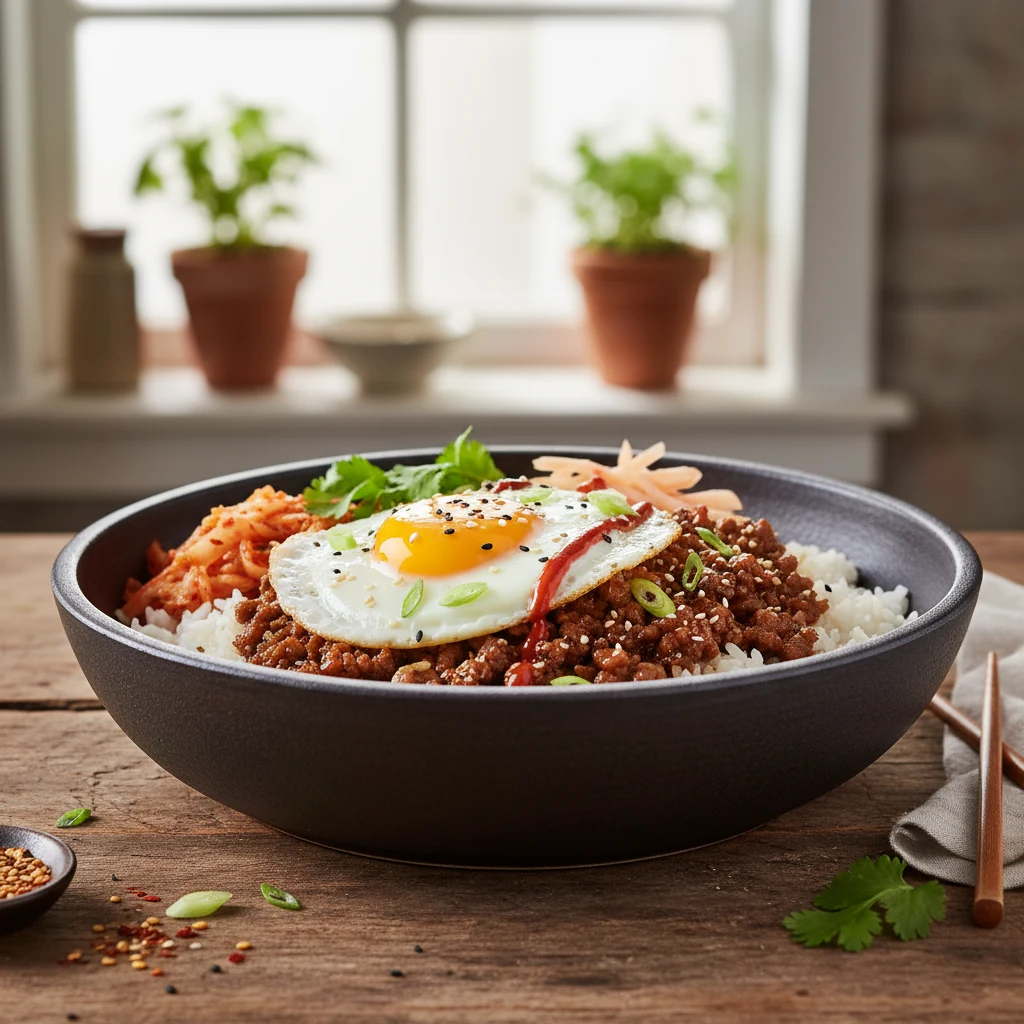
You want dinner that hits like takeout, cooks itself, and leaves the sink empty. This bowl does all three while flexing bold, craveable flavor. Think sweet-spicy gochujang beef, tender rice, and crunchy veggies—made together, not in 17 different pans. If your weekday evenings move at sprint speed, this is your “set it, forget it, wow everyone” move. Ten bucks says it becomes a weekly ritual before the leftovers even cool.
The Secret Behind This Recipe
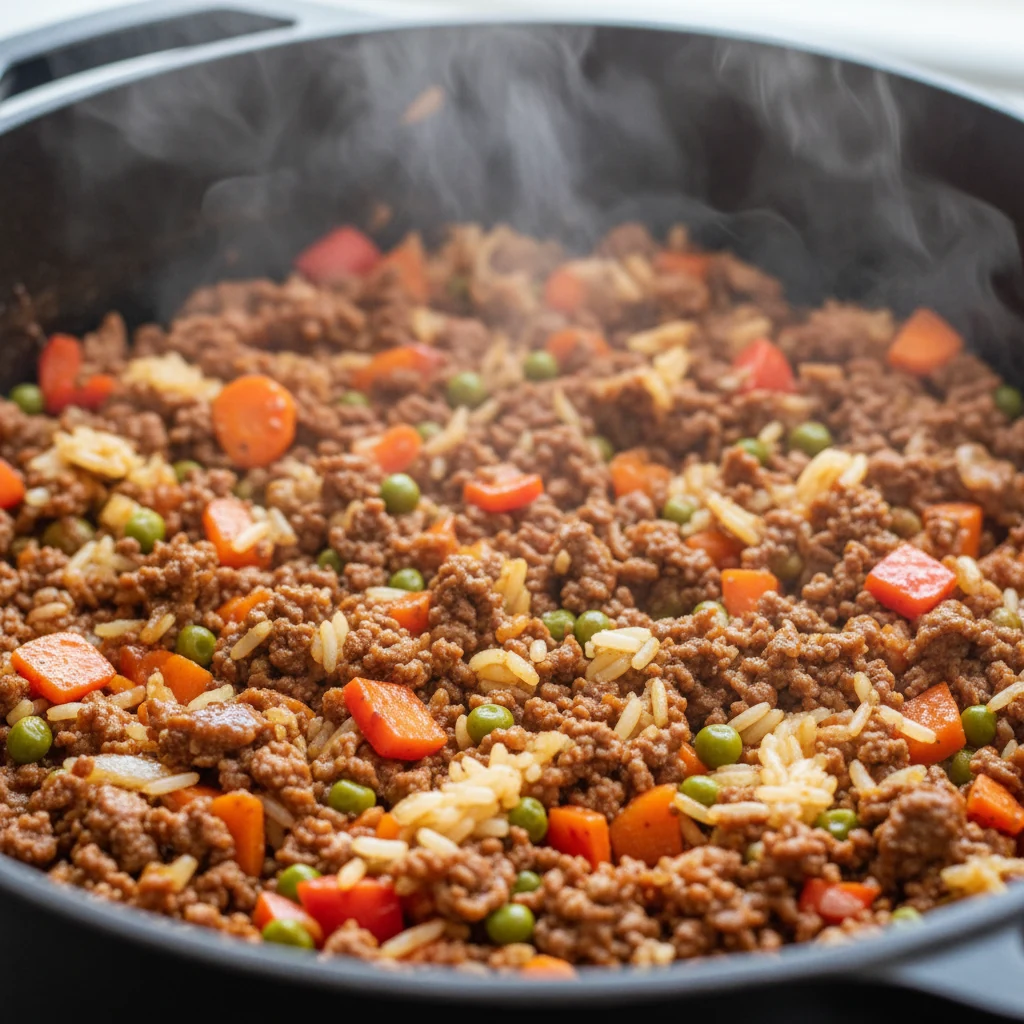
The magic is balance: gochujang + soy + a touch of sweetness meet savory beef and steam-kissed rice. That trifecta coats every grain, so you get a glossy, sticky-saucy finish with zero last-minute juggling. The rice cooks right in the beefy, umami-rich liquid, which means flavor infusion and less cleanup—win-win, right?
Two more secrets: toast the rice briefly so it holds texture, and let it steam off-heat at the end. That rest turns good rice into great rice. FYI, you’ll also bloom the gochujang in hot fat for 30–45 seconds to unlock depth and complexity fast.
What Goes Into This Recipe – Ingredients
- 1.5 cups jasmine rice, rinsed until water runs mostly clear
- 1 lb (450 g) beef mince (80–90% lean works best)
- 1 medium yellow onion, finely diced
- 3 cloves garlic, minced
- 1 tablespoon fresh ginger, grated
- 1 medium carrot, small dice
- 1 red bell pepper, small dice
- 1/2 cup frozen peas (optional for color and sweetness)
- 2 tablespoons neutral oil (canola, avocado, or grapeseed)
- 3 tablespoons gochujang (Korean chili paste)
- 3 tablespoons low-sodium soy sauce (or tamari)
- 1 tablespoon oyster sauce (optional, extra umami)
- 1 tablespoon brown sugar or honey
- 1 tablespoon rice vinegar
- 2 teaspoons toasted sesame oil
- 2 1/4 cups low-sodium beef stock (or water), plus more as needed
- 3–4 scallions, thinly sliced
- 1 tablespoon toasted sesame seeds, for garnish
- Kimchi, fried eggs, extra gochujang (optional toppers)
- Kosher salt and black pepper, to taste
Let’s Get Cooking – Instructions
- Rinse the rice well. Swirl it under cold water until it runs mostly clear. Drain thoroughly so you don’t throw off the liquid ratio.
- Mix your sauce base. In a small bowl, whisk together gochujang, soy sauce, oyster sauce, brown sugar, and rice vinegar. Set aside so it’s ready when the heat is on.
- Heat the pot. Add neutral oil to a large, heavy pot or deep sauté pan over medium-high heat. When it shimmers, you’re good.
- Build aromatic flavor. Add onion with a pinch of salt; cook 3–4 minutes until translucent. Stir in garlic and ginger; cook 30–45 seconds until fragrant. Don’t burn the garlic. Please.
- Brown the beef. Add the mince, season with black pepper, and break it up. Cook until no pink remains and edges brown, about 4–5 minutes. If very fatty, spoon off excess drippings, leaving 1–2 tablespoons for flavor.
- Bloom the gochujang. Push beef aside, add the sauce base, and stir it in the hot spot for 30–45 seconds. Coat the beef so everything turns glossy red and smells irresistible.
- Add the veg. Toss in carrot, bell pepper, and peas. Sauté 2 minutes to soften slightly. You want color, not mush.
- Toast the rice. Stir in rinsed, drained rice. Cook 60–90 seconds, stirring, to coat every grain with the beefy sauce. This keeps the rice from going soggy.
- Add liquid and simmer. Pour in 2 1/4 cups stock. Scrape the bottom to release any flavorful bits. Bring to a strong simmer, then reduce heat to low, cover tightly, and cook 12 minutes without lifting the lid.
- Steam off-heat. Turn off the heat but keep covered for 10 minutes. This gentle steam finishes the rice and locks in moisture.
- Finish and season. Uncover, drizzle with 2 teaspoons sesame oil, and fluff with a fork. Fold in most of the scallions. Taste and adjust salt/soy or a splash of vinegar if needed.
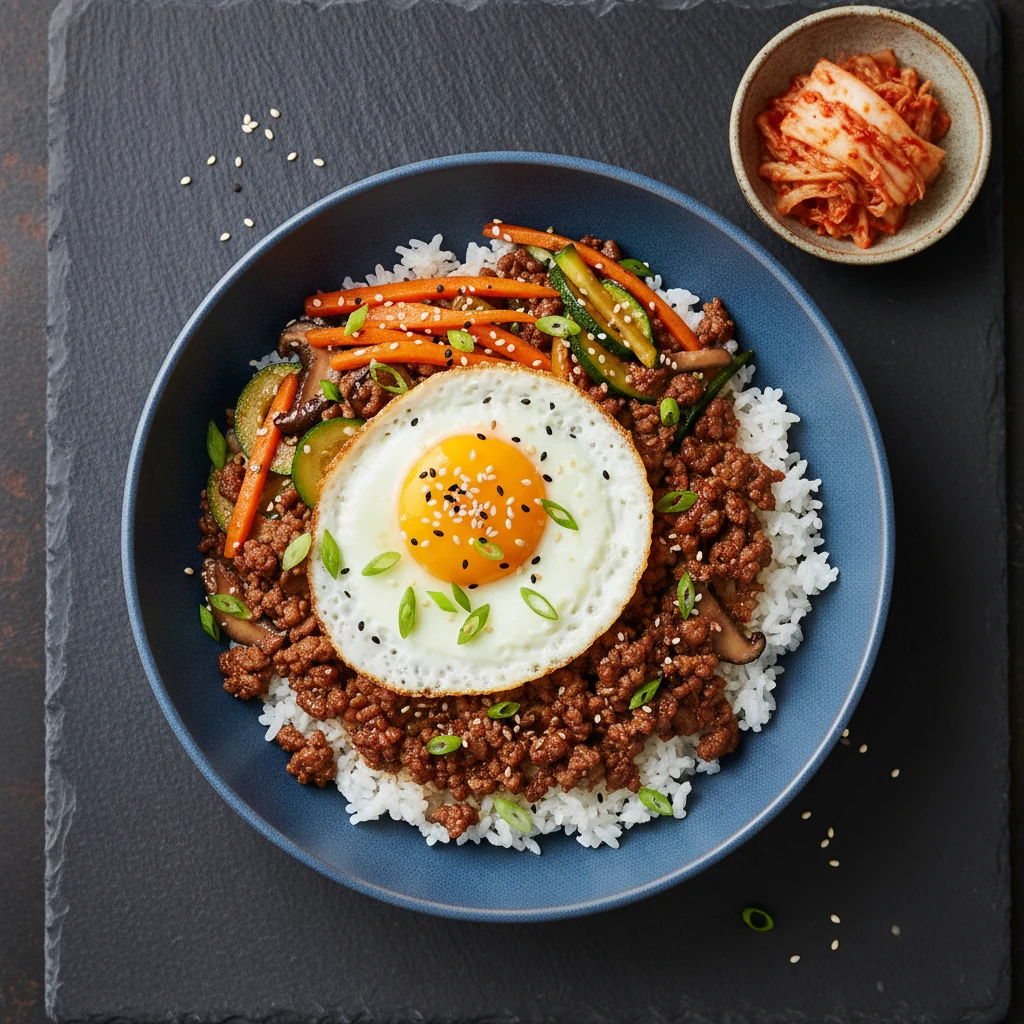
- Serve and flex. Scoop into bowls, sprinkle sesame seeds and remaining scallions, and top with kimchi or a crispy fried egg. Extra heat? Add a dab of gochujang.
Preservation Guide
Cool leftovers quickly, then store in airtight containers. In the fridge, it keeps up to 4 days; in the freezer, 2 months is the sweet spot. Portion into single servings for grab-and-go lunches—future you will thank present you.
Reheat on the stovetop with a splash of water or stock over medium, stirring until steamy. Microwave works too: cover loosely, add a teaspoon of water, and heat in 60–90 second bursts, fluffing between rounds. If freezing, press plastic wrap against the surface before sealing to fight freezer burn. IMO, leave off garnishes until serving so they stay fresh and crunchy.
Why This is Good for You
It’s comfort food with a plan. You get high-quality protein from beef, complex carbs from rice, and a solid hit of fiber from veggies. The one-pot method also lets you control oil and sodium far better than takeout.
Gochujang delivers flavor density, so you use less fat to get satisfaction. Add a heap of crunchy veg on top, and you’re flirting with a balanced macro bowl that actually tastes fun. FYI, swapping to brown rice or extra veg pushes the nutrition win even further.
Pitfalls to Watch Out For
- Soggy rice: Don’t skip rinsing. Also measure liquid—remember the sauce adds volume. If using very watery veggies, reduce stock by 2–3 tablespoons.
- Burnt bottom: Keep heat on low once covered and don’t peek. Thin pans scorch; use heavy-bottomed cookware.
- Bland bowl: Salt in layers. Taste at the end and adjust soy, vinegar, or a pinch of sugar to balance heat and savory.
- Too spicy: Start with 2 tablespoons gochujang for heat-sensitive eaters and offer more at the table.
- Gummy texture: Don’t over-stir during cooking. Fluff gently after the steam rest to keep grains separate.
- Greasy finish: Drain excess beef fat, leaving just enough to carry flavor. You control the richness; not the other way around.
Different Ways to Make This
- Bulgogi-inspired sweet-savory: Add 1 extra tablespoon brown sugar and 1 teaspoon grated pear to the sauce.
- Extra spicy: Stir in 1–2 teaspoons gochugaru (Korean chili flakes) with the aromatics.
- Veg-forward: Swap half the beef for finely chopped mushrooms. Same savor, fewer calories.
- Vegetarian: Use firm tofu crumbled and pan-crisped, or plant mince. Switch stock to vegetable.
- Chicken or turkey: Ground poultry loves these flavors. Add 1 tablespoon oil extra and watch doneness—no pink.
- Low-carb: Use cauliflower rice. Cook beef and sauce fully, then fold in cauli rice and sauté 3–4 minutes uncovered—no extra stock.
- Brown rice swap: Use 1.5 cups brown jasmine with 2 3/4–3 cups stock. Simmer covered 30–35 minutes, then steam 10.
- Gluten-free: Use tamari instead of soy, and check your gochujang brand. Many are GF, but labels vary.
- Instant Pot: Sauté aromatics and beef on Sauté, add sauce and rice with 1 3/4–2 cups stock, then cook on High for 4 minutes, natural release 10.
- Crispy rice twist: After cooking, press leftovers into a skillet with a drizzle of oil and pan-fry until the bottom turns crunchy and golden.
FAQ
Can I use brown rice instead of jasmine?
Yes. Increase the liquid to 2 3/4–3 cups for 1.5 cups brown rice, simmer covered 30–35 minutes, then steam off-heat for 10 minutes. Expect a chewier texture and deeper, nutty flavor that pairs great with gochujang.
What if I don’t have gochujang?
Blend 2 tablespoons chili paste (like sambal) with 1 tablespoon miso or ketchup and a pinch of sugar. It won’t be identical, but you’ll get heat, body, and a sweet-savory vibe that plays well in the bowl.
How do I make this gluten-free?
Use tamari instead of soy sauce and confirm your gochujang is certified GF. Many brands are, but some add wheat. Everything else here is naturally gluten-free.
Can I cook this in an Instant Pot?
Absolutely. Sauté aromatics and beef, stir in sauce, then add rinsed rice and 1 3/4–2 cups stock. Pressure cook on High for 4 minutes, natural release for 10 minutes, then fluff. TBH, it’s almost too easy.
What beef fat percentage should I use?
85–90% lean keeps things balanced. If you use 80% or fattier, drain excess after browning, leaving 1–2 tablespoons to carry flavor and bloom the gochujang.
How can I scale this up for meal prep?
Double everything and use a wider pot so the rice cooks evenly. Keep the rice-to-liquid ratio steady and don’t overcrowd—the more surface area, the better the simmer. Store in individual containers with a squeeze of lime and extra scallions for fresh vibes all week.
Why did my rice turn mushy?
Too much liquid or insufficient rinsing usually does it. Next time, rinse rice well, measure stock carefully, and toast the rice 60–90 seconds before adding liquid. Also avoid lifting the lid during the simmer and steam phases.
Is this kid-friendly?
Yes, with minor tweaks. Use 2 tablespoons gochujang or even less, add a little extra brown sugar, and serve with a fried egg to mellow the heat. Put extra spice on the side for the heat-lovers.
Wrapping Up
One pot, big flavor, dishes done—this is the weeknight win that doesn’t need a pep talk. You get saucy beef, perfectly cooked rice, and crisp-tender veg in a tight 30-minute package. Tweak the heat, pile on the toppings, and call it dinner. Your future self will swear you ordered in, but your kitchen knows the truth.
Printable Recipe Card
Want just the essential recipe details without scrolling through the article? Get our printable recipe card with just the ingredients and instructions.