Penne Pasta Recipes for Weeknight Wins in 30 Minutes
Fast weeknight dinners, big flavor, zero fuss: master a base penne, then spin it into creamy, spicy, or herby bowls in under 30 minutes.
You don’t need a culinary degree to crush dinner—you just need a system that works every time. Here’s the move: one pan, one pot, seven staple ingredients, and a framework that adapts to whatever’s in your fridge. Sounds bold? Good. Because the fastest path to a restaurant-level plate at home is a repeatable playbook that still feels exciting. If you can boil water and stir, you can make a penne that gets cheers at the table and leftovers that never sit around. Let’s build the most useful pasta blueprint you’ll cook all year.
What Makes This Recipe So Good
- Ready in 30 minutes with real ingredients you probably already have. No weird hacks, no mystery packets.
- Restaurant-level texture thanks to a silky emulsion of sauce, fat, and starchy pasta water. That glossy cling? You made it.
- Flexible by design: keep it creamy, go spicy, add protein, or make it dairy-free with easy swaps that still taste elite.
- Budget-friendly: tomato paste + canned tomatoes + aromatics = maximal flavor for minimal cash.
- One base, endless spins: arrabbiata, vodka, pesto, baked, primavera—same method, different vibes.
- Great for meal prep: sauce holds, pasta reheats like a dream with a splash of water. Pretty much foolproof, IMO.
What You’ll Need (Ingredients)
- Penne – 12 ounces (340g). Rigate (ridged) grabs sauce best.
- Kosher salt – for pasta water and seasoning.
- Olive oil – 2 tablespoons, for sautéing.
- Unsalted butter – 1 tablespoon, for finishing (optional, but delightful).
- Yellow onion – 1 small, finely chopped.
- Garlic – 3–4 cloves, minced.
- Red pepper flakes – 1/4–1/2 teaspoon, to taste (optional for heat).
- Tomato paste – 2 tablespoons, for deep umami and color.
- Crushed tomatoes – 1 can (28 ounces), or passata for smoother texture.
- Heavy cream or half-and-half – 1/2 cup; for dairy-free, use unsweetened cashew cream or oat cream.
- Parmesan or Pecorino Romano – 1/2 cup finely grated, plus more for serving.
- Fresh basil – a handful, roughly torn; or flat-leaf parsley.
- Black pepper – freshly cracked, for bite.
- Pinch of sugar – optional, to balance acidity.
- Optional boosters:
- Vodka – 2 tablespoons, for that classic silky tang (it cooks off).
- Protein – 8 ounces cooked Italian sausage, rotisserie chicken, sautéed shrimp, or chickpeas.
- Veg – baby spinach, roasted peppers, mushrooms, or zucchini.
- Lemon zest – 1/2 teaspoon, for brightness at the end.
Cooking Instructions
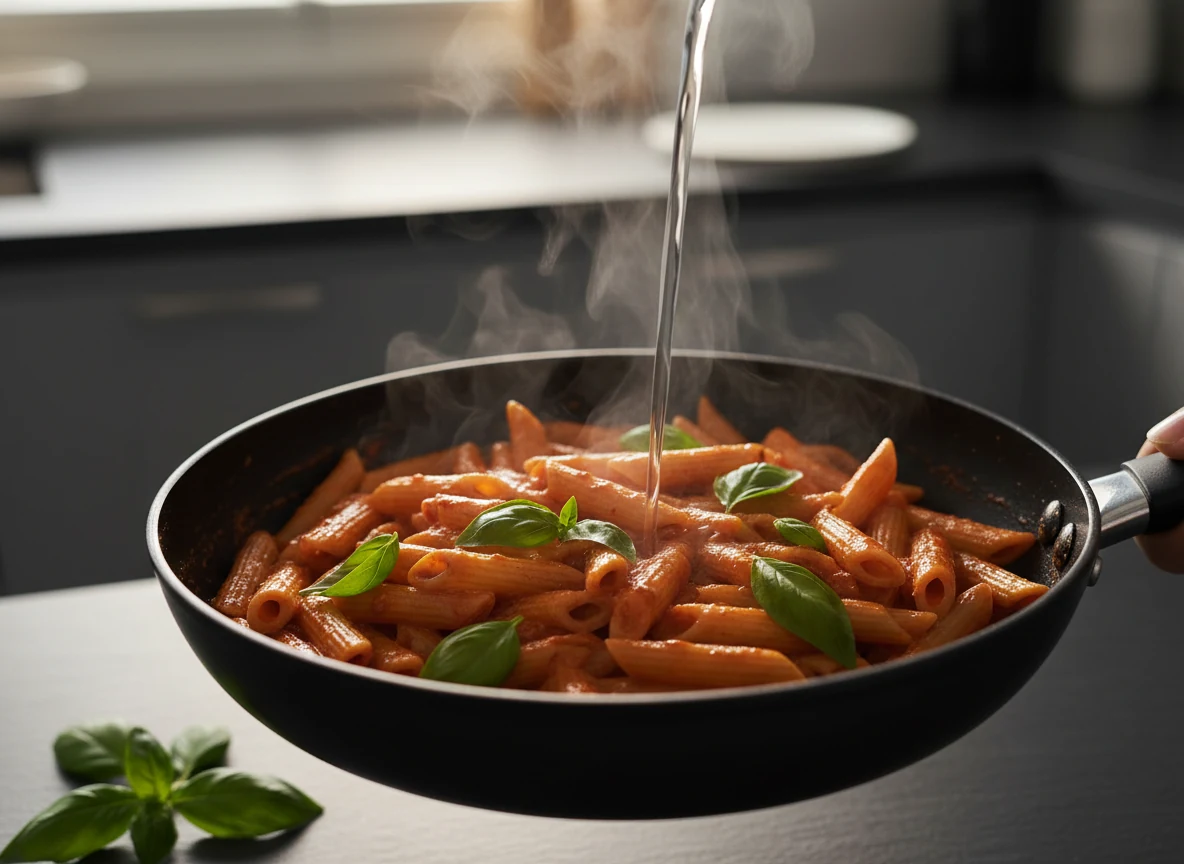
- Salt the water aggressively. Bring a large pot (4–5 quarts) of water to a boil. Add 1–1.5 tablespoons kosher salt per 4 quarts. It should taste pleasantly salty—this seasons the pasta from the inside.
- Cook the penne. Add pasta and cook until al dente (usually 1 minute less than package instructions). Reserve 1 to 1.5 cups pasta water, then drain.
- Build the flavor base. While the pasta boils, heat olive oil in a large sauté pan over medium. Add onion with a pinch of salt and cook 3–4 minutes until translucent. Stir in garlic and red pepper flakes; cook 30–60 seconds until fragrant.
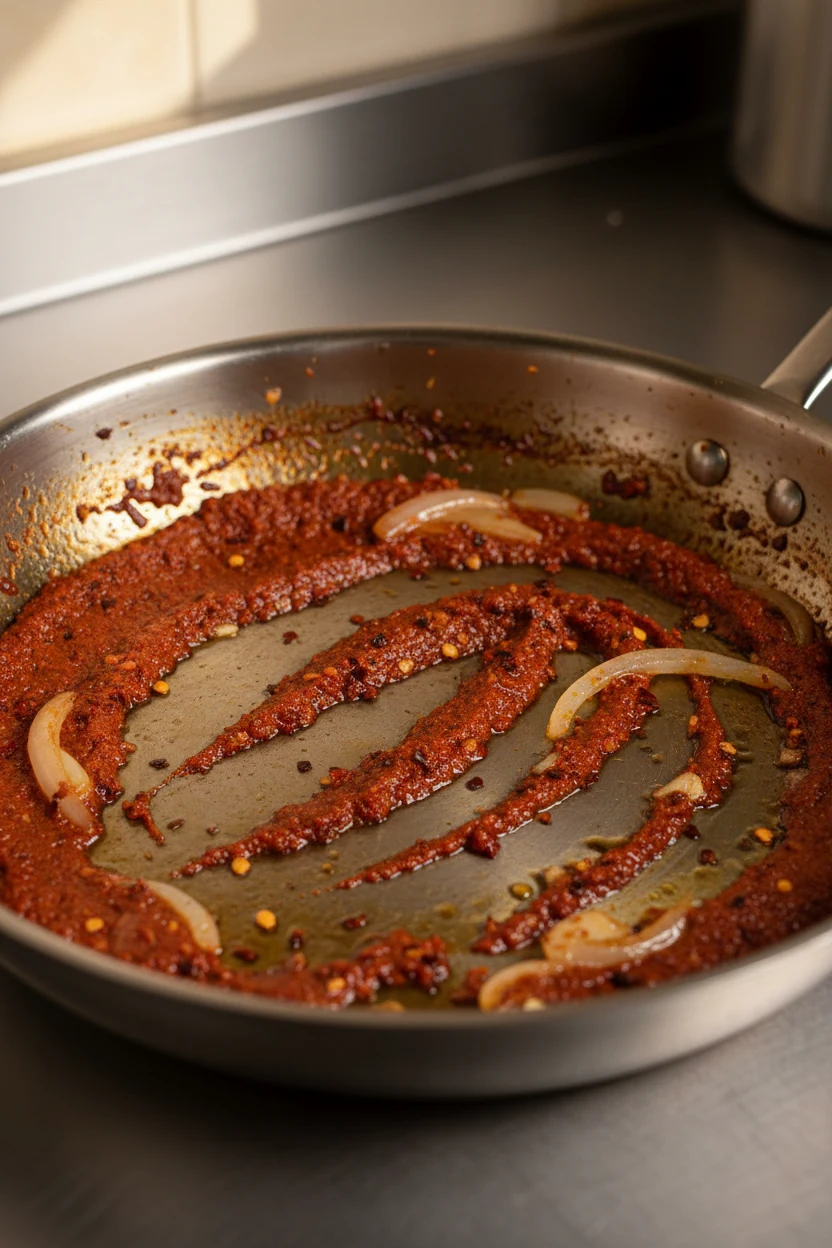
- Caramelize the tomato paste. Add tomato paste and cook, stirring, 2–3 minutes until it darkens brick-red and smells sweet. This step creates depth—don’t skip.
- Deglaze and simmer. Splash in vodka (if using) or 1/4 cup pasta water; scrape up browned bits. Stir in crushed tomatoes and a pinch of sugar. Simmer 5–7 minutes to meld.
- Creamy finish. Reduce heat to low. Stir in cream. Season with salt and pepper. If too thick, add a splash of reserved pasta water; if too thin, simmer 1–2 minutes.
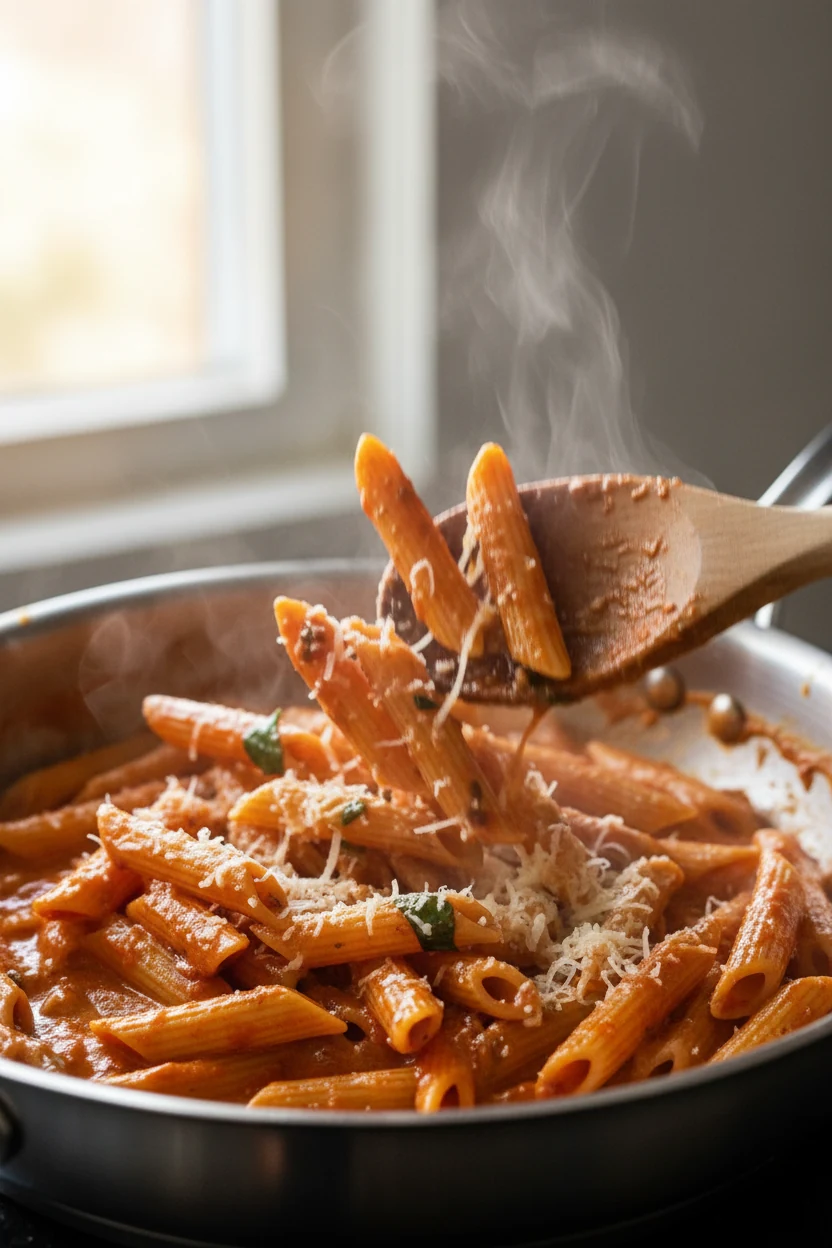
- Toss to emulsify. Add drained penne to the sauce with 1/2 cup pasta water. Toss vigorously over medium heat 1–2 minutes until glossy and the sauce clings. Stir in butter and half the cheese until melted.
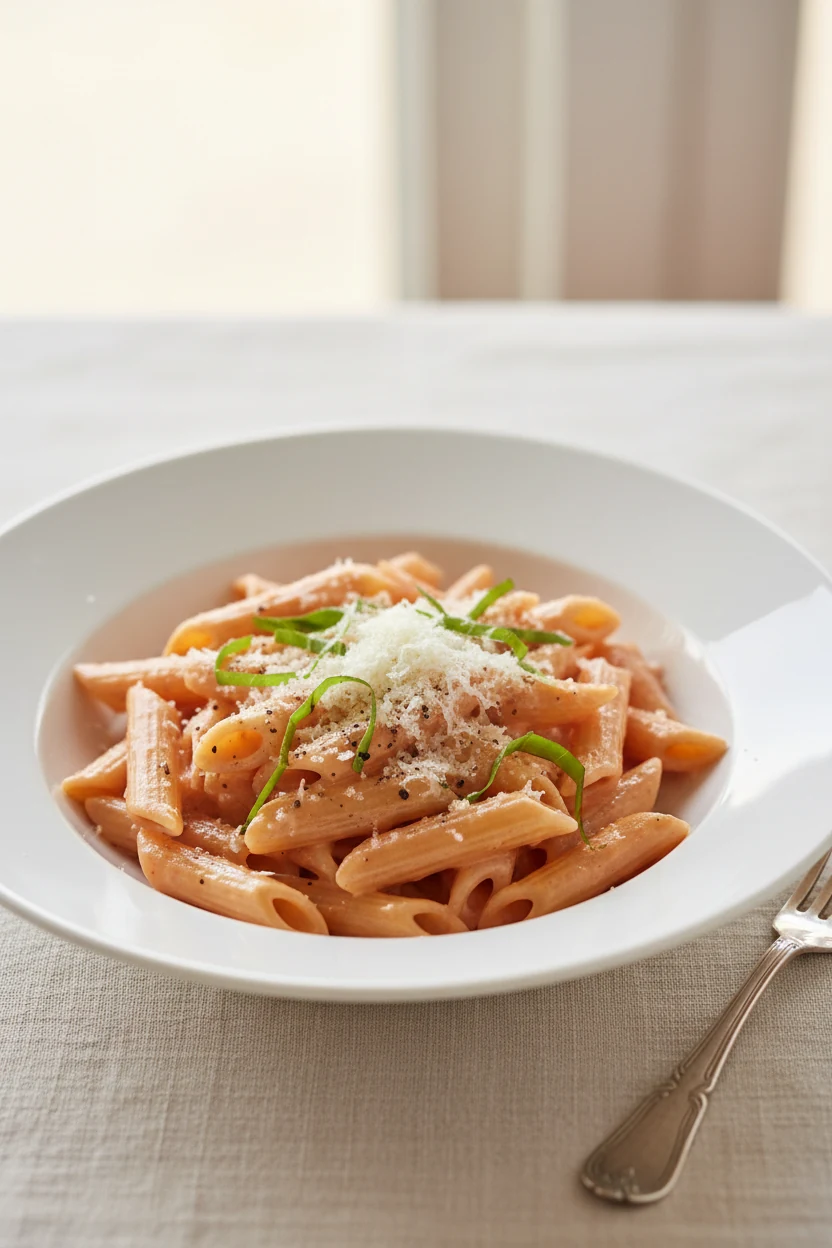
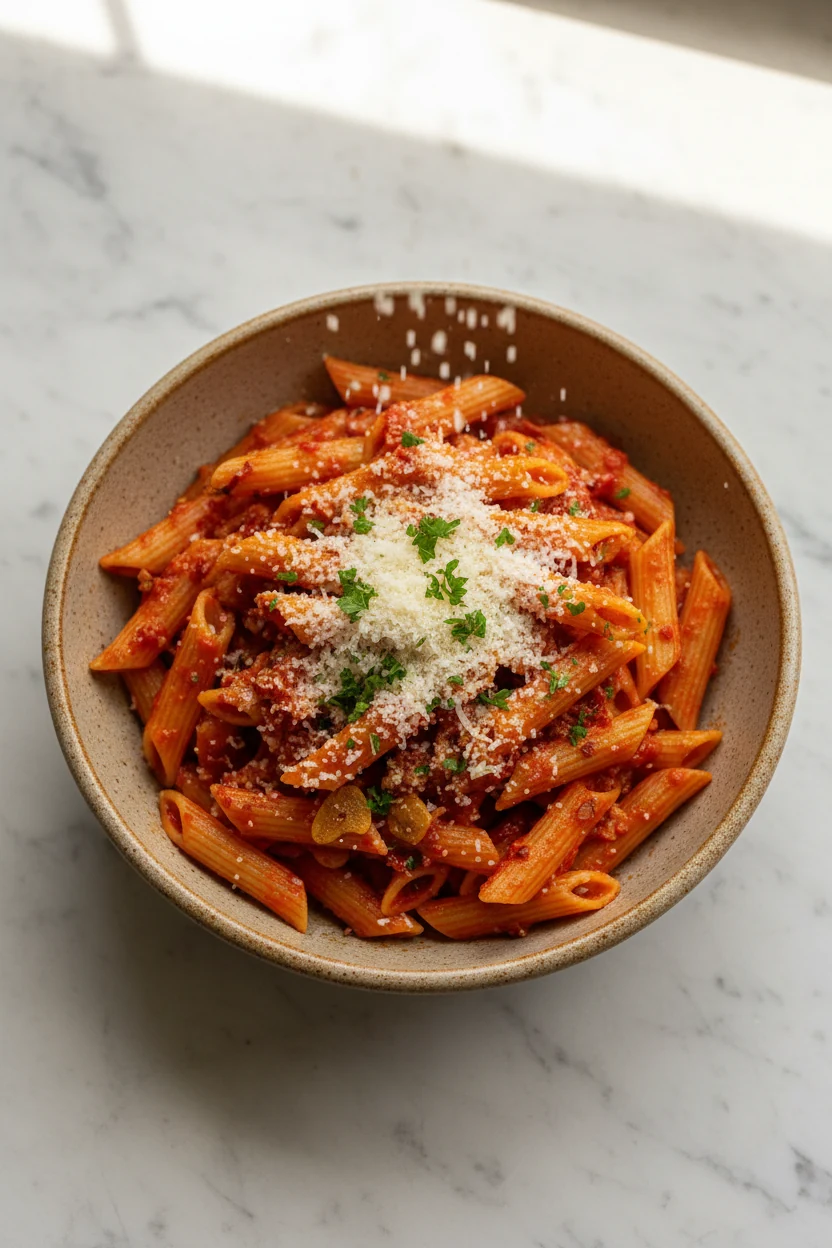
- Finish and serve. Fold in basil (and spinach or protein, if using, until warmed). Add lemon zest, adjust salt and pepper. Plate with remaining cheese and a crack of black pepper. Bask in applause.
Storage Tips
- Fridge: Store in airtight containers for up to 4 days. Add a spoonful of water or milk when reheating to revive the sauce.
- Freezer: Freeze sauce (without pasta) for 2–3 months. Pasta itself can get soft in the freezer—cook fresh and toss with thawed sauce.
- Reheat: Stovetop over low with a splash of water, stirring until saucy again. Microwave works too—short bursts, stir between.
- Make-ahead: Cook pasta 2 minutes shy of al dente, toss with oil, cool, and refrigerate. Warm in sauce later with pasta water to finish.
Why This is Good for You
- Balanced fuel: Carbs for energy, protein if you add chicken/shrimp/chickpeas, and fats for satisfaction—aka fewer late-night snacks.
- Tomato power: Cooked tomatoes deliver lycopene, a powerful antioxidant that loves to hang out with olive oil.
- Fiber boost: Choose whole-grain or legume-based penne for extra fiber and a steadier energy curve, FYI.
- Customizable sodium: You control seasoning—way better than jarred sauces.
- Fresh herbs: Basil and parsley add polyphenols and brightness, so you eat more and feel great. Science and flavor can be friends, TBH.
Avoid These Mistakes
- Under-salting the water: Bland pasta is impossible to fix later. Salt the water like the sea.
- Skipping the tomato paste caramelization: That 2–3 minutes turns okay sauce into “whoa, that’s good.”
- Draining all the pasta water: It’s liquid gold. Reserve at least 1 cup for emulsifying.
- Boiling after adding cream: High heat can split dairy. Keep it gentle.
- Adding cheese too early: Stir cheese off high heat so it melts smoothly, not grainy.
- Overcooking the pasta: It continues cooking in the sauce. Go al dente so it finishes perfectly.
- Dumping cold protein into hot sauce: Warm it first or fold in gently so the sauce stays silky.
Different Ways to Make This
- Spicy Arrabbiata: Skip cream and butter. Double the red pepper flakes, add 2 cloves extra garlic, finish with parsley and Pecorino. Fiery and simple.
- Classic Vodka Penne: After caramelizing tomato paste, add 1/4 cup vodka, reduce by half. Stir in 1/2 cup cream and 2 tablespoons butter. Silk city.
- Pesto Primavera: Swap tomato base for 1/2 cup pesto and a splash of pasta water. Toss with blanched broccoli, peas, and zucchini. Finish with lemon.
- Creamy Mushroom: Sauté 8 ounces sliced creminis with the onion; add a splash of Marsala or dry white wine before tomatoes. Rich, earthy, wildly cozy.
- Sausage and Peppers: Brown 8 ounces Italian sausage, set aside. Sauté sliced bell peppers with onion, then proceed with base. Fold sausage back in.
- Mediterranean Tuna: Use a tomato base without cream. Add a can of good tuna in olive oil, capers, olives, lemon zest, and parsley. Salty, bright, satisfying.
- Baked Penne: Make sauce slightly looser, toss with pasta, layer in a dish with mozzarella and Parm. Bake at 400°F (200°C) for 15–20 minutes until bubbly.
- One-Pan No-Boil: Toast dry penne in oil 2 minutes, add sauce ingredients + 3–3.5 cups water. Simmer covered, stirring, until al dente. Add cream and cheese to finish. Weeknight wizardry.
- Dairy-Free Creamy: Use cashew cream (1/2 cup) and olive oil finish. Nutritional yeast adds cheesy depth without cheese.
- High-Protein: Use chickpea penne, add 1 cup white beans or chicken, and finish with extra Parm. Big flavor, bigger staying power.
FAQ
Can I use gluten-free penne without changing the method?
Yes. Gluten-free penne works well—just cook it slightly under al dente since it softens faster in sauce. Reserve extra pasta water; GF pasta releases more starch, which helps emulsify but can thicken quickly. Thin the sauce as needed.
How much salt should I put in the pasta water?
A reliable target is 1–1.5 tablespoons kosher salt per 4 quarts of water. If using table salt, use a bit less. The water should taste pleasantly salty, not briny—think well-seasoned soup.
My sauce turns grainy after I add cheese. What gives?
Cheese can seize if the sauce is too hot or too acidic. Reduce heat to low, add cheese gradually, and stir until melted. A splash of warm pasta water can help smooth things out. Grate cheese finely for even melting.
I don’t have cream. What can I substitute?
Half-and-half works; for lighter, use whole milk plus an extra tablespoon of butter. For dairy-free, cashew cream or barista-style oat cream gives body without splitting. Coconut milk is fine but will add coconut flavor—pair it with spicy or curry-ish notes.
How much pasta should I cook per person?
Plan on 2 ounces (56g) dry pasta per person for a main course. If you’re loading it with protein and veg, you can go slightly less. For hungry guests or athletes, 3 ounces is reasonable.
Can I make the sauce ahead of time?
Absolutely. The tomato base actually improves after a night in the fridge. Store it separately for up to 4 days or freeze for 2–3 months. Reheat gently, then marry with fresh-cooked penne and pasta water for best texture.
Do I need basil, or can I use dried herbs?
Fresh basil brings a pop you’ll miss, but you can use 1 teaspoon dried Italian seasoning in the simmer and finish with parsley or arugula. A little lemon zest at the end fakes that “fresh” lift nicely.
How do I stop cream from curdling?
Turn the heat down before adding cream, and avoid boiling afterward. If the sauce is very acidic, add cream slowly while stirring, and finish with butter or cheese off heat for a stable emulsion. Gentle heat is your friend.
In Conclusion
This isn’t just a list of meals—it’s a playbook you can run on autopilot after a long day. Start with the base, season boldly, and let starchy pasta water be your secret weapon. Then swap a few elements to go spicy, herby, or ultra-creamy without starting from scratch. Keep it fast, keep it flexible, and you’ll have a weeknight staple that never gets boring. Your future self (and your budget), will say thanks—loudly, IMO.
Printable Recipe Card
Want just the essential recipe details without scrolling through the article? Get our printable recipe card with just the ingredients and instructions.