Halibut Recipes to Turn Weeknight Dinners Into Pure Velvet
Fast, flaky weeknight dinners made luxe with simple techniques, bright sauces, and pantry swaps—ready in 30 minutes or less.
You want restaurant-level fish without white-tablecloth stress. Fair. Halibut delivers buttery flakes, takes on bold flavors, and cooks faster than you can set the table. The only catch? Overcook it and it chews like a gym mat—don’t.
Here’s the move: a crisp sear, a quick lemon-garlic butter, and a few smart add-ins that make you look like you trained on a line. It’s flexible, fast, and wildly satisfying. Because yes, you deserve big flavor on a Tuesday.
Why You’ll Love This Recipe
- Restaurant results, home effort: Golden crust, tender center, glossy pan sauce—no culinary school required.
- Ready in ~20 minutes: Season, sear, baste, serve. That’s it. No complex steps, no drama.
- Flexible and forgiving: Finish on the stove or slide into the oven. Thick or thin fillets both work with small timing tweaks.
- Pantry-friendly flavor: Lemon, garlic, butter, herbs—timeless. Add capers or white wine if you’re feeling extra.
- Weeknight or date-night: Scales up for a crowd and looks fancy with minimal effort. IMO, this is peak low-lift cooking.
- Pairs with anything: Rice, roasted potatoes, crisp salads, buttery greens—no wrong answers here.
Ingredients Breakdown
- Halibut fillets: 4 skinless pieces, 6–8 oz each, 1–1.5 inches thick. Pat them very dry.
- Kosher salt: 1¼ tsp, divided (or ¾ tsp fine sea salt). Season to the thickness.
- Black pepper: ½ tsp, freshly ground, divided.
- Neutral high-heat oil: 1 tbsp (avocado, canola, or refined olive oil) for the initial sear.
- Unsalted butter: 2 tbsp for basting (adjust to taste).
- Extra-virgin olive oil: 1 tbsp for flavor in the basting sauce.
- Garlic: 2 cloves, minced (about 2 tsp). Don’t burn it.
- Lemon: Zest of 1 + 2 tbsp juice, plus extra wedges for serving.
- Fresh herbs: 2 tbsp chopped parsley + 1 tbsp dill or chives.
- Dijon mustard: 1 tsp, to help emulsify and add tang.
- Capers (optional): 1 tbsp, drained. Salty pops = big payoff.
- Dry white wine or seafood stock (optional): ¼ cup, for a quick reduction sauce.
- Red pepper flakes (optional): Pinch, for low-key heat.
- Flaky sea salt: To finish, because texture matters.
Cooking Instructions
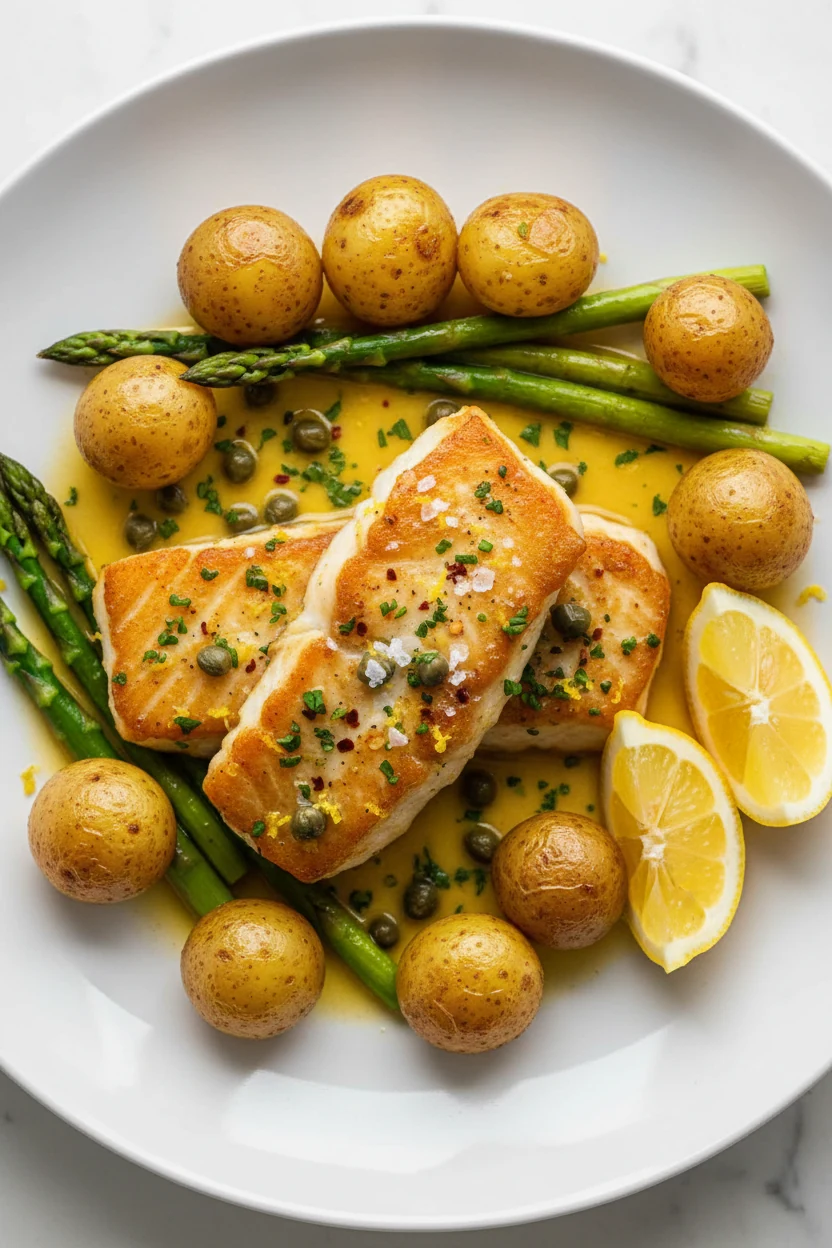
- Pre-season: Pat the fish bone-dry. Sprinkle all sides with 1 tsp kosher salt and most of the pepper. If time allows, let it sit 15–30 minutes in the fridge to dry-brine.
- Mix the flavor bomb: In a small bowl, combine butter, olive oil, garlic, lemon zest, Dijon, herbs, and capers (if using). Keep the lemon juice and wine/stock separate.
- Heat the pan: Set a heavy stainless or cast-iron skillet over medium-high. When it’s hot, add the neutral oil and swirl to coat.
- Sear side one: Lay the fillets in the pan, presentation side down. Press gently for 5–10 seconds so they make full contact. Don’t move them for 3–4 minutes.
- Check the crust: When edges look golden and the fish releases easily, flip carefully. If it’s sticking, give it another 30–60 seconds.
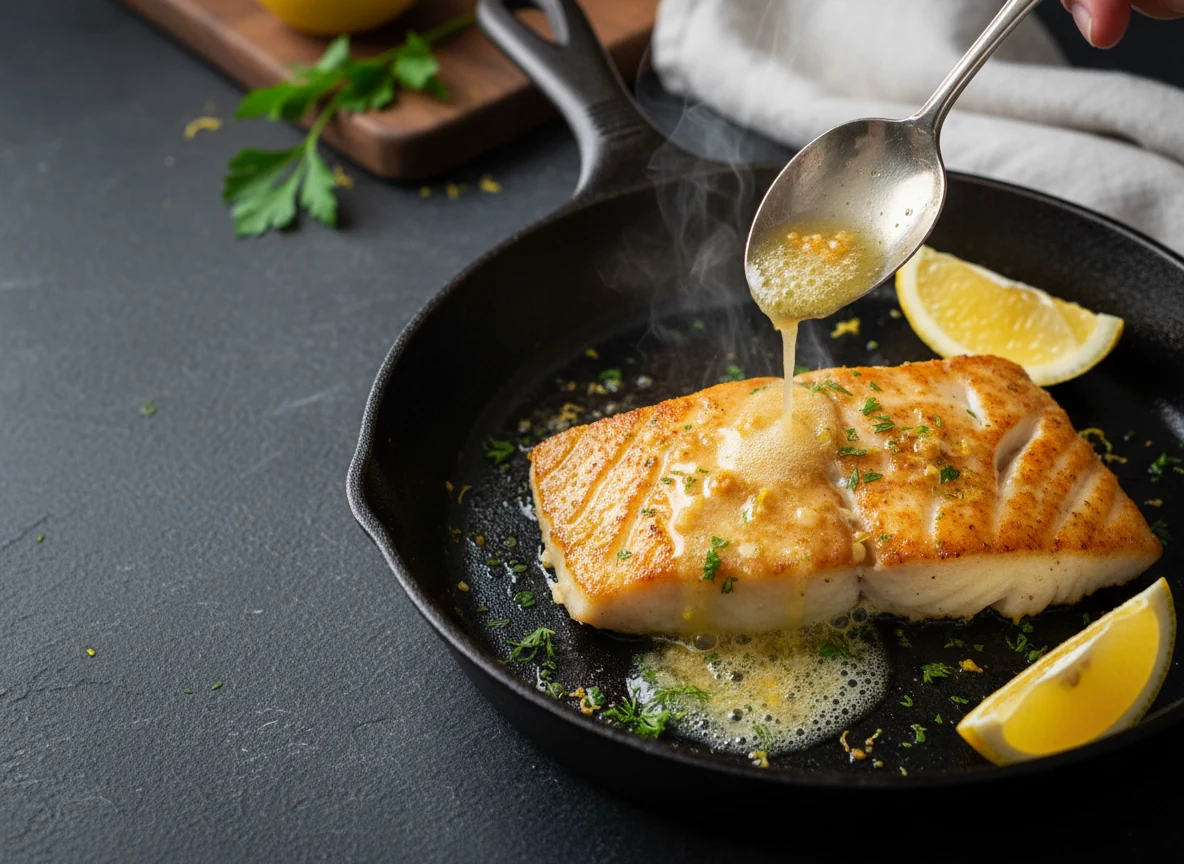
- Lower heat, add butter mix: Drop in the butter-herb mixture. It should foam, not scorch. Tilt the pan and baste the fish for 30–60 seconds.
- Deglaze (optional): Pour in the wine or stock and lemon juice. Scrape up the browned bits and simmer 30–60 seconds to slightly thicken.
- Finish cooking: For 1-inch fillets, cook 2–3 more minutes on the stove, basting often, until the thickest part hits 125–130°F for medium. For extra-thick pieces, transfer to a 400°F oven for 3–6 minutes.
- Rest: Move the fish to warm plates. Spoon sauce over. Rest 3 minutes so juices settle.
- Finish and serve: Sprinkle flaky salt, add a pinch of red pepper flakes if you like, and hit it with a fresh squeeze of lemon. Serve hot.
- Timing notes: Thinner fillets (¾ inch) cook fast—start checking at 5–6 minutes total. Thick cuts (1½ inches) may need up to 10–12 minutes combined stove/oven time.
- Doneness checks: The fish should flake when nudged and look moist and just-opaque in the center. Err slightly under; carryover heat finishes the job.
Keeping It Fresh
- Fridge, cooked: Store in an airtight container for up to 2 days. Reheat gently: low heat in a skillet with a splash of water/stock, or 30–40% power in the microwave. Don’t blast it—dry city.
- Fridge, raw: Keep raw fish on ice or the coldest shelf, ideally cook within 24 hours.
- Freezing, raw: Wrap tightly (plastic + freezer bag) and freeze up to 3 months. Thaw overnight in the fridge. FYI, many high-quality fillets arrive previously frozen—still great.
- Freezing, cooked: Not ideal; the texture suffers. If you must, freeze with sauce and reheat very gently.
- Make-ahead: Mix the herb butter up to 3 days ahead. Pre-salt fish up to 1 hour before cooking for better seasoning.
- Leftover glow-up: Flake into tacos, grain bowls, or a lemony salad. Don’t chase that original sear; go for new textures instead.
Why This is Good for You
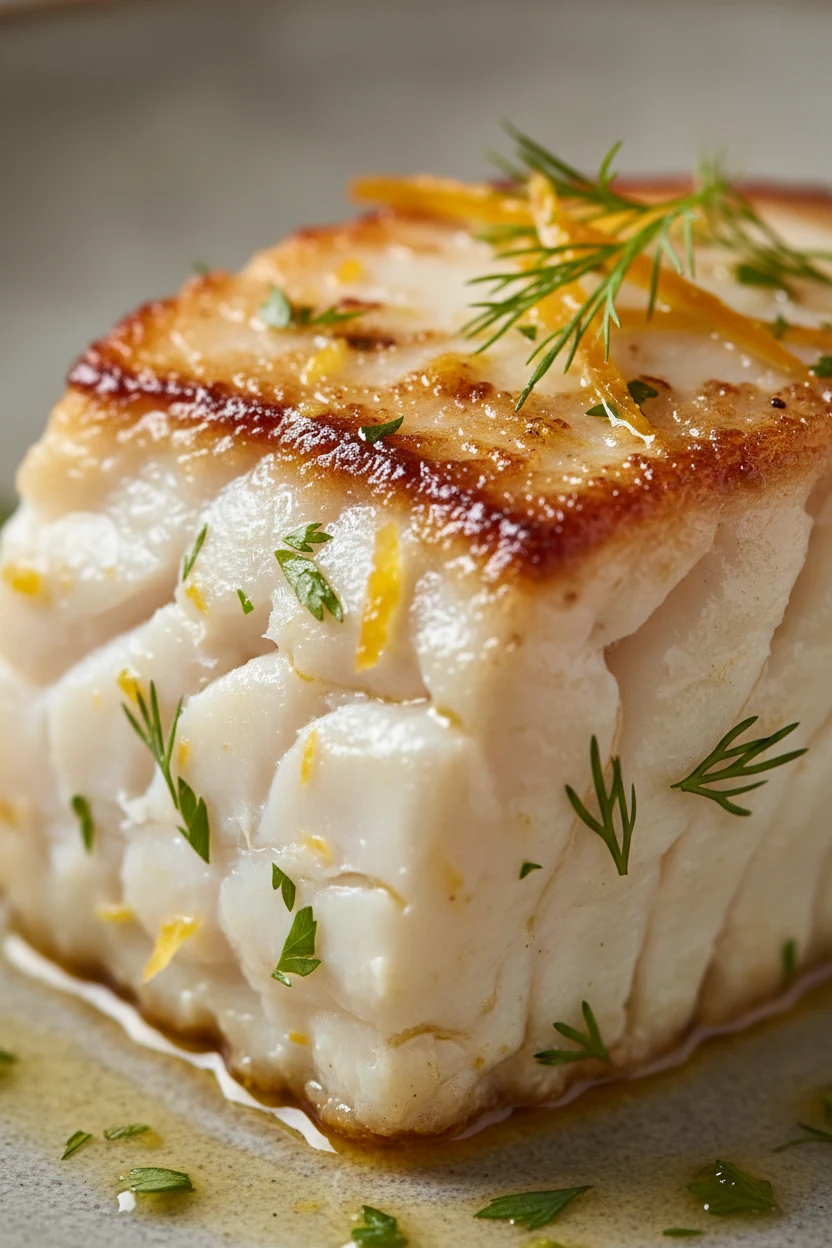
This dish packs lean, high-quality protein with modest, heart-friendly fats from olive oil and a little butter. You also get selenium and B-vitamins that support metabolism and immune function. Add herbs and lemon for antioxidants and flavor that doesn’t depend on heavy sauces.
- High protein, low carb: Supports satiety and fits gluten-free, low-carb, and keto patterns.
- Modest omega-3s: Not salmon-level, but still a helpful nudge for brain and heart health.
- Smart portioning: A 6–8 oz serving leaves room for veggies and whole grains on the plate.
- Mercury note: Enjoy in moderation, especially for pregnant individuals—aim for reasonable frequency. Balance with lower-mercury fish. TBH, variety is the long game.
Pitfalls to Watch Out For
- Overcooking: The fastest way to ruin it. Use a thermometer and pull at 125–130°F.
- Wet surface = weak crust: If you don’t pat the fish dry, it steams. No thanks.
- Cold fish in hot pan: Let fish shed its fridge chill for 10–15 minutes so it cooks evenly.
- Pan overcrowding: Two fillets at a time if your skillet’s small. Crowding drops heat and kills browning.
- Wrong oil: Extra-virgin olive oil alone burns at high heat. Start with a neutral oil; add butter/EVVO to baste.
- Too much acid too early: Lemon juice in a screaming-hot pan can dull the sauce or make it harsh. Add after the sear.
- Skipping the rest: Two to three minutes off heat keeps the fish juicy. Don’t rush the plate.
- Ignoring thickness: A ¾-inch piece is not a 1½-inch steak. Adjust time accordingly.
- No bone check: Run fingers along the center line and use tweezers to pluck pin bones before cooking.
Recipe Variations
- Miso-Ginger Broil: Whisk 1 tbsp white miso, 1 tbsp mirin, 1 tsp soy/tamari, 1 tsp grated ginger, 1 tsp honey. Brush on, broil 6–8 minutes until lightly charred. Finish with scallions and sesame.
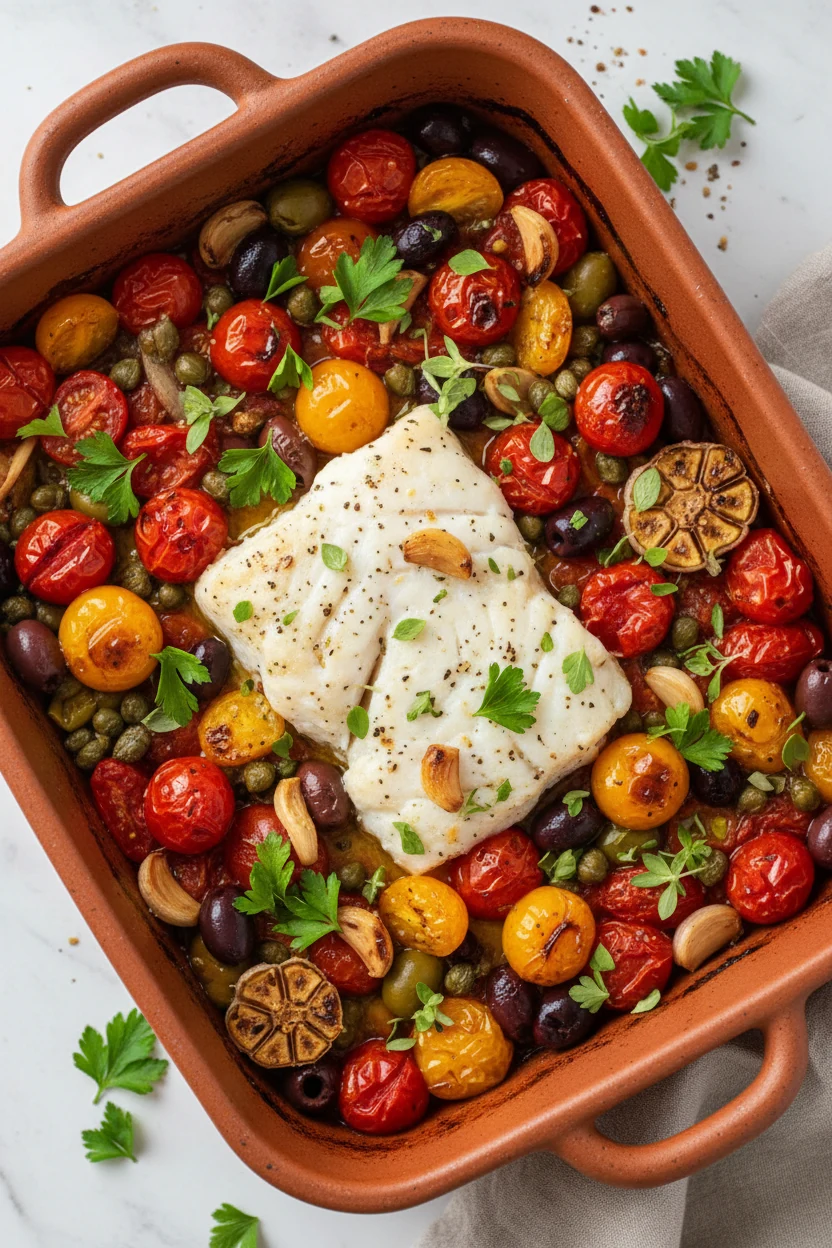
- Mediterranean Bake: In a 400°F dish, toss cherry tomatoes, olives, capers, garlic, oregano, and olive oil. Nestle fish, season, bake 10–12 minutes. Lemon and parsley to finish.
- Pesto-Parmesan Crust: Spread pesto on top, sprinkle with panko + grated Parmesan. Bake at 425°F for 8–12 minutes until the topping crisps.
- Coconut-Lime Curry Poach: Simmer coconut milk with red curry paste, garlic, lime zest, and fish sauce. Slip fish in, gently poach 7–10 minutes. Finish with lime juice and cilantro.
- Blackened: Coat with a spice blend (paprika, cayenne, garlic powder, onion powder, thyme, salt). Sear in a hot cast-iron skillet 2–3 minutes per side. Serve with mango salsa.
- Sheet-Pan Supper: Roast sliced potatoes 15 minutes at 425°F. Add asparagus tossed with oil and salt, top with seasoned fish. Roast 8–10 minutes more. One pan, no chaos.
- Grill-It-Up: Oil grates well. Brush fish with oil, lemon, and herbs. Grill over medium-high, 3–4 minutes per side, to 130°F. Great with chimichurri.
- Taco Night: Rub with cumin, chili powder, and lime zest. Sear, flake, and stuff into warm tortillas with cabbage, avocado, and a drizzle of crema.
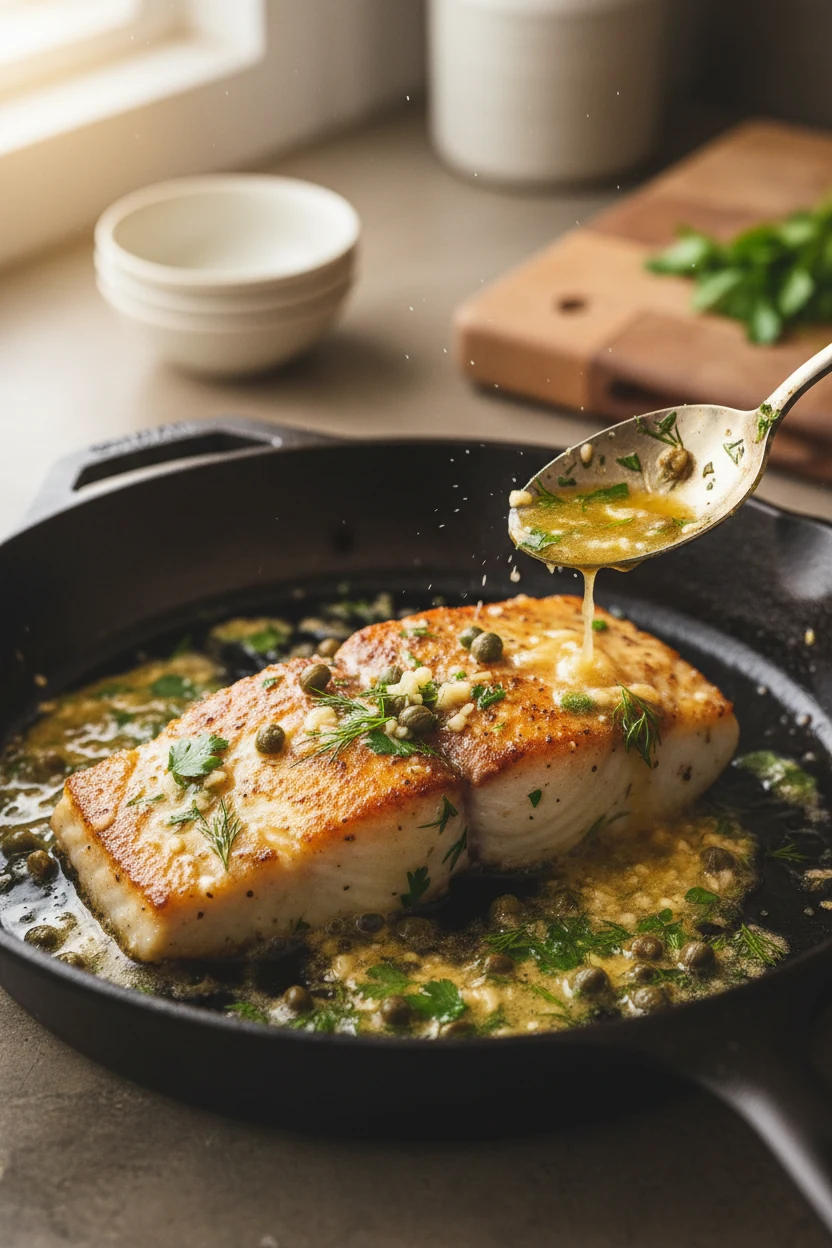
- Piccata-Style: Sear fish, remove. Simmer white wine, a knob of butter, lemon, and capers. Return fish to glaze for 30 seconds. Shower with parsley.
FAQ
Can I use frozen halibut?
Yes. Thaw overnight in the fridge (or under cold running water, sealed). Pat very dry before cooking. Frozen can be excellent quality if handled well—just avoid pieces with ice crystals or strong odor.
How do I know when it’s done without a thermometer?
Nudge the thickest part with a fork—flakes should separate easily, and the center should look just-opaque and moist. The flesh will spring back when pressed. When in doubt, pull early; carryover heat finishes it.
Skin-on or skinless—what’s better?
Both work. Skin-on can crisp beautifully and protects the flesh; just score lightly to prevent curling. Many fillets come skinless and cook just as well with a golden crust on the presentation side.
What fish can I substitute if I can’t find halibut?
Choose firm, mild white fish: cod loin, haddock, grouper, mahi-mahi, or sablefish (butterfish) for a richer option. Adjust time by thickness, not by species.
Can I cook it all in the oven?
Absolutely. Bake at 400–425°F on an oiled sheet for 8–12 minutes, depending on thickness, until 125–130°F. For color, preheat the pan in the oven or switch to broil for the last minute.
What pan should I use to avoid sticking?
Use stainless steel or cast iron, preheated well. Add oil, then fish. Let it sear undisturbed until it naturally releases. Nonstick works in a pinch, but it won’t brown as deeply.
Can I make this dairy-free?
Yes. Swap butter for a good olive oil or plant-based butter. The lemon, garlic, and herbs still shine, and you’ll get a lovely sauce by deglazing with stock and finishing with olive oil off-heat.
How far ahead can I season the fish?
Salt up to an hour in advance and keep chilled. This dry brine seasons evenly and improves texture. Longer than that edges toward curing, which can change the bite—save that for a different project.
What should I serve with it?
Think bright and simple: lemony arugula salad, roasted baby potatoes, asparagus, herbed rice, or a citrusy quinoa. A quick yogurt-dill sauce or garlicky aioli never hurts.
What wine pairs well?
Crisp whites like Sauvignon Blanc, Albariño, or Pinot Gris lift the lemon-herb notes. Prefer richer? An unoaked Chardonnay plays nice with butter without bulldozing the fish.
In Conclusion
You don’t need a brigade or a blowtorch to cook fish like a pro. You just need heat control, a timer (or thermometer), and a lemon-garlic-herb trio that never misses.
Use the base method, riff with the variations, and keep it playful. The result? Silky, golden, weeknight-friendly fish that tastes like a flex—because it is.
Printable Recipe Card
Want just the essential recipe details without scrolling through the article? Get our printable recipe card with just the ingredients and instructions.