Paratha Recipes to Turn Breakfast Into Pure Bliss
Flaky layers, big flavor, and zero fuss for mornings. Learn easy fillings and tips to elevate breakfast fast.
Imagine a breakfast that costs pennies, cooks in minutes, and makes you feel like you cheated the bakery. That’s the power move hiding in a stack of hot, flaky parathas. You don’t need fancy gear, mystical skills, or a seven-spice spell—just a smart dough and a few pro-level tricks. Cook two, stash four, and watch your mornings stop being chaos and start being victory. Ready to upgrade your routine without upgrading your grocery bill?
The Secret Behind This Recipe
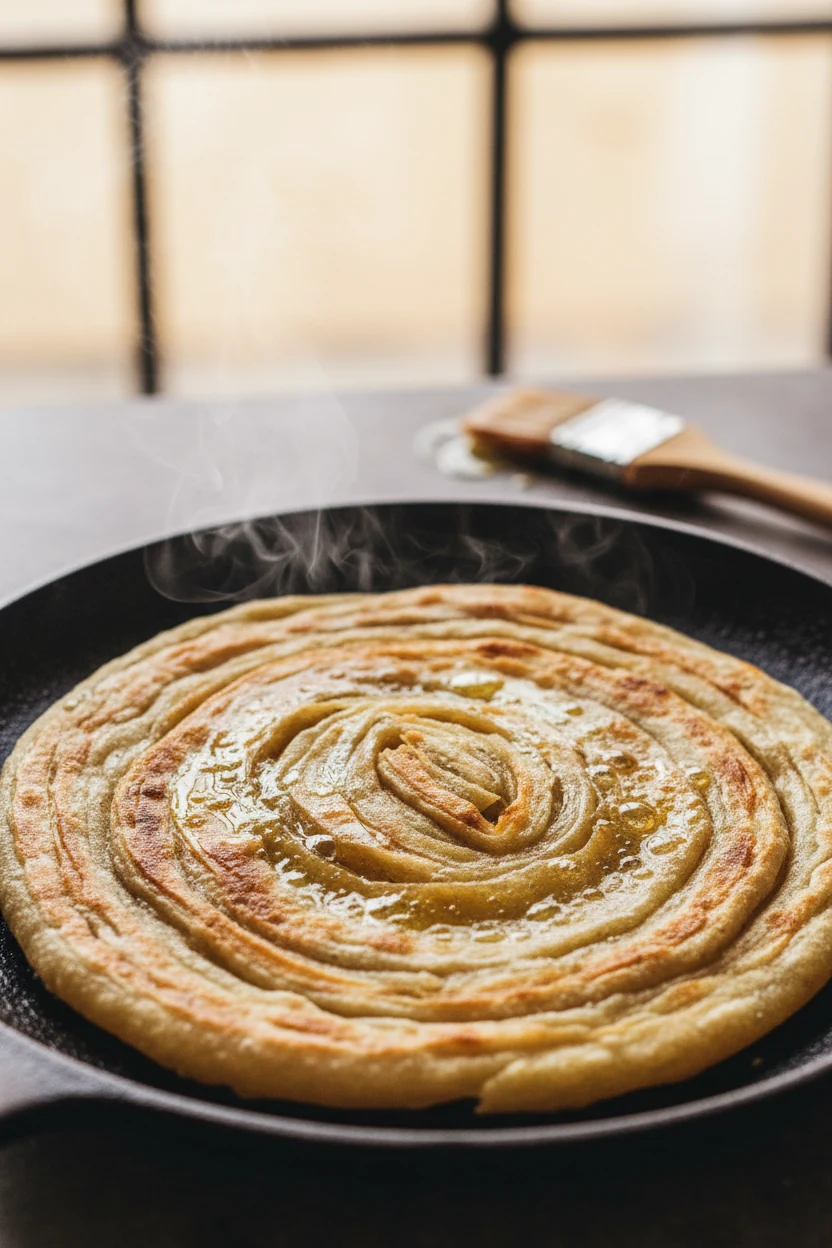
Parathas are all about hydration, rest, and heat control. Get those three right and you’ll win every time. A slightly soft dough lets you roll thin without tearing, resting relaxes gluten so layers form cleanly, and medium-high heat gives that signature blister and chew. Want flakiness? Laminate with ghee or oil and roll it like a rope into a coil (lachha style). Want stuffed? Keep fillings dry, well-seasoned, and evenly spread so nothing leaks or breaks.
Best part: the base is simple, and the variations are endless. Aloo, paneer, gobi, methi, cheese—pick your mood, match your pantry, and go. The method stays consistent, so you can master one technique and produce five different wins. Efficiency that tastes like a weekend but cooks like a weekday—IMO, that’s the sweet spot.
Shopping List – Ingredients
Base Dough (Makes 8–10 medium parathas)
- 2 cups whole wheat flour (atta)
- 1/2 teaspoon salt
- 1 tablespoon oil or ghee (plus more for cooking)
- 3/4 to 1 cup warm water (as needed)
- Extra dry flour for dusting
Layering (for flaky, lachha-style)
- 2–3 tablespoons ghee or neutral oil
- Pinch of salt (optional, for sprinkling between layers)
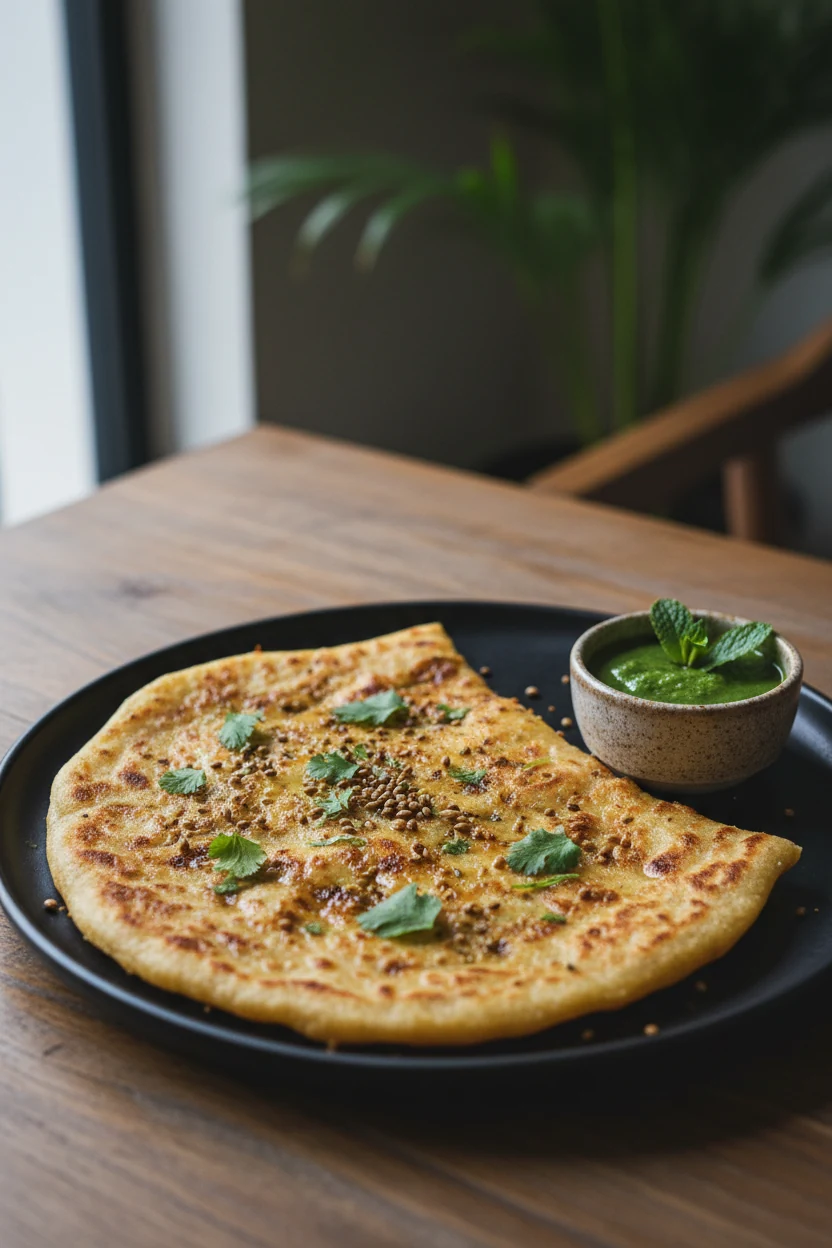
Filling Options (Choose 1–2 to start)
- Aloo (Potato): 2 medium potatoes, boiled and mashed; 1/2 teaspoon cumin; 1/2 teaspoon garam masala; 1/2 teaspoon amchur (dry mango) or lemon juice; 1 green chili finely chopped; 2 tablespoons chopped cilantro; salt to taste
- Paneer: 200 g paneer, grated; 1/2 teaspoon chaat masala; 1/2 teaspoon crushed coriander seeds; 1 green chili finely chopped; 2 tablespoons chopped cilantro; salt to taste
- Gobi (Cauliflower): 2 cups finely grated cauliflower; 1/2 teaspoon turmeric; 1/2 teaspoon cumin; 1/2 teaspoon garam masala; chopped cilantro; salt; (optional) lightly sauté to reduce moisture
- Methi (Fenugreek): 1 cup chopped fresh methi; 1 small onion finely chopped; 1/2 teaspoon chili flakes; pinch of turmeric; salt
- Cheese & Corn: 1 cup shredded cheese; 1/2 cup sweet corn; pinch of chili flakes; black pepper; salt
- Keema (Optional): 200 g minced meat cooked with onion, garlic, ginger, cumin, garam masala, and salt; cooled and drained well
Let’s Get Cooking – Instructions
Step 1: Make the Dough
- In a bowl, combine flour and salt. Add oil/ghee and rub it in until sandy.
- Gradually add warm water and mix into a soft dough. Knead 5–7 minutes until smooth.
- Cover and rest 20–30 minutes. FYI, rest time = easier rolling and better layers.
For Plain Layered Paratha (Lachha Style)
- Divide dough into 8–10 balls. Keep covered so they don’t dry out.
- Roll one ball into a thin circle (6–7 inches), brush lightly with ghee/oil, and sprinkle a pinch of salt if you like.
- Fold into pleats (like a fan), then roll the pleated strip into a spiral/coil. Tuck the end under and rest 5 minutes.
- Flatten the coil and roll gently into a 6–7 inch paratha. Don’t crush the layers—be kind.
- Heat a tawa/skillet over medium-high. Cook paratha 30–40 seconds until bubbles show; flip.
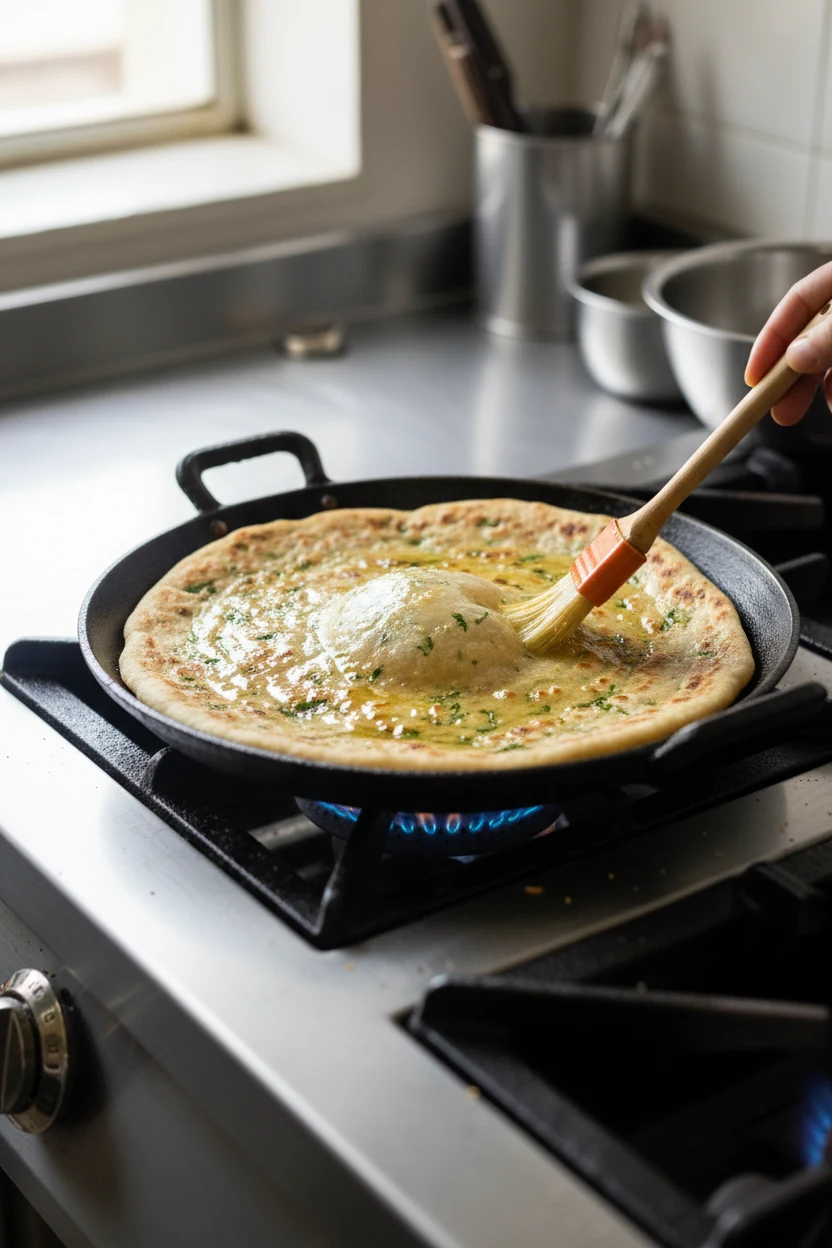
- Spread a little ghee/oil; cook 30–40 seconds; flip again; press edges, and cook until golden spots and crisp layers appear.
- Repeat with remaining dough. Stack in a kitchen towel to keep warm and soft.
For Stuffed Parathas (Aloo/Paneer/Gobi/Methi)
- Mix your chosen filling. Keep it dry: squeeze moisture (especially gobi), and taste for salt/spice.
- Divide dough into 8–10 balls. Roll one into a 5-inch round.
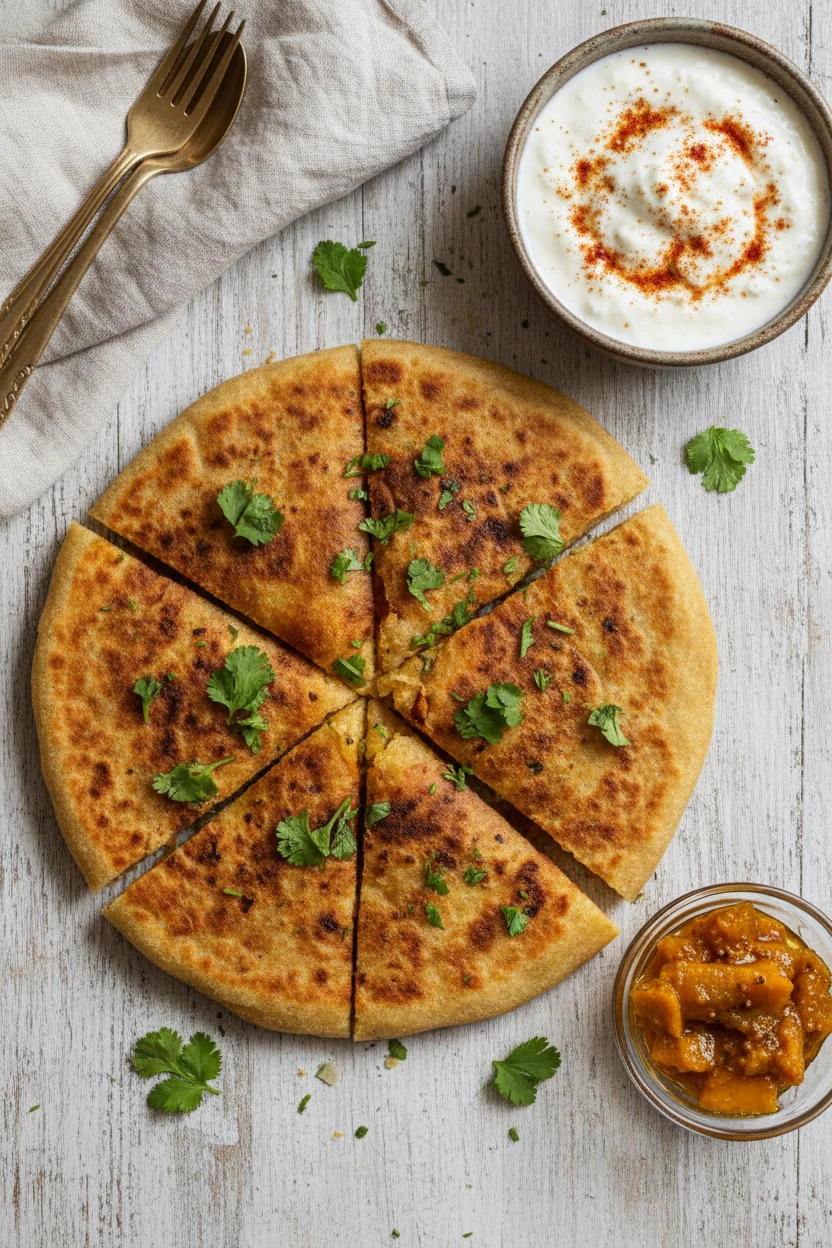
- Place 2–3 tablespoons filling in the center. Gather edges to form a pouch and pinch to seal.
- Gently flatten, dust with flour, and roll to 6–7 inches. Use light pressure so it doesn’t burst.
- Cook on a hot tawa over medium-high: 30–40 seconds per side initially, then brush ghee/oil and cook until crisp and golden.
- If it puffs, you nailed it. If it leaks, you probably overfilled or didn’t dry the mix enough—live and learn.
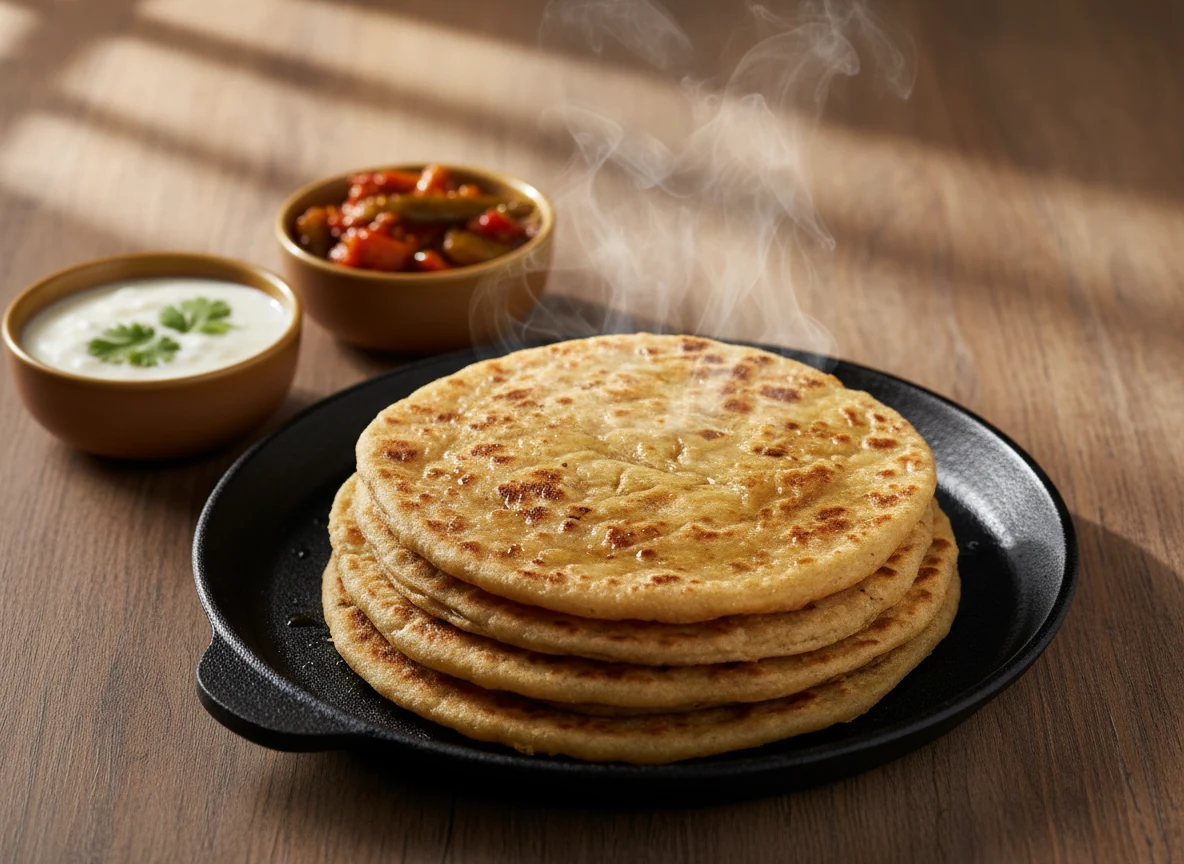
- Repeat for all. Serve hot with yogurt, pickle, or a quick raita.
Quick Raita (Bonus)
- Mix 1 cup yogurt with 1/2 teaspoon roasted cumin, salt, chopped cilantro, and a pinch of chili powder.
- Optional: add grated cucumber or onion. Chill while you cook.
How to Store
Cooked parathas keep well. Cool fully, stack with parchment, and refrigerate in an airtight container for up to 4 days. Reheat on a hot tawa with a touch of ghee for the original crunch.
For freezer meal prep, half-cook parathas (light spots, no deep browning), cool, and freeze with parchment between each. Reheat straight from frozen on a medium-hot pan and finish with ghee. If you freeze stuffed versions, make sure the filling is low moisture so you don’t get soggy drama later.
Dough balls can be stored, too. Lightly oil, cover, and refrigerate up to 24 hours. Bring to room temp before rolling for best results.
What’s Great About This
- Ridiculously versatile: One dough, infinite fillings.
- Budget-friendly: Pantry staples turn into crave-worthy meals.
- Meal-prep gold: Cook, stack, reheat—still flaky.
- Fast: Mix-to-pan in under 45 minutes, no drama.
- Balanced: Whole wheat base + protein or veg = legit breakfast.
- Scale-friendly: Double the dough, thank yourself later.
Don’t Make These Errors
- Skipping rest time: Tight dough tears and bullies your layers.
- Over-hydrating: Dough that’s too wet sticks and breaks. Aim for soft, not sticky.
- Cold pan: You’ll get pale, tough parathas. Medium-high heat is your friend.
- Wet fillings: Water is the enemy. Squeeze gobi, cool keema, and drain paneer if needed.
- Overstuffing: Tempting, but no. 2–3 tablespoons is a smart cap.
- Crushing coils: For lachha, roll gently. Aggressive rolling = lost layers.
- Too much oil: You want crisp, not greasy slicks. Brush, don’t pour.
Variations You Can Try
- Lachha Paratha: Classic layered, extra flaky. Perfect with curry or chai.
- Aloo Paratha: Mashed spiced potatoes—comfort food that moonlights as lunch.
- Paneer Paratha: Protein-rich and mild; great with chutney or raita.
- Gobi Paratha: Savory cauliflower with warm spices; squeeze well for best texture.
- Methi Paratha: Fenugreek adds a gentle bitterness and aroma. Pair with yogurt.
- Cheese & Corn: Melty, kid-approved, and snackable. Keep it drier than you think.
- Kerala Parotta (Cousin): Use all-purpose flour, more lamination, and a longer rest for ultra-layered street-style vibes.
- Egg Paratha: Cook plain paratha, then add beaten egg to the pan and press the paratha onto it—breakfast power-up.
FAQ
Which flour is best for parathas?
Use whole wheat atta for classic texture and flavor. You can blend 75% atta with 25% all-purpose flour for softer layers. Full AP flour leans toward Kerala parotta style—not wrong, just different.
Ghee or oil—what should I use?
Ghee adds rich flavor and crisp edges. Neutral oil works fine and is lighter. For balance, use oil in the dough and ghee on the pan. Your taste buds get the best of both worlds.
Can I make them vegan?
Yes. Use oil instead of ghee and plant-based yogurt with your parathas. For fillings, skip paneer and add spiced tofu or chickpeas. Flavor stays bold; no compromise.
How do I stop stuffed parathas from breaking?
Keep fillings dry, avoid overstuffing, and let your dough rest. Seal the pouch well, dust with flour, and roll gently from center out. If it still tears, your dough was likely too tight—add a teaspoon of water and knead again.
Why are my parathas tough?
Common culprits: not enough water, skipping rest, or a pan that’s too cold. Aim for a soft dough, 20–30 minutes rest, and medium-high heat. Overcooking dries them out, so pull them when spots turn golden.
Can I freeze them?
Absolutely. Half-cook, cool, and freeze with parchment between parathas. Reheat on a hot pan straight from the freezer and finish with ghee. Texture snaps back like magic—no microwave needed.
What pan works best?
A heavy tawa or cast-iron skillet holds heat and delivers even browning. Nonstick is okay but won’t crisp quite as nicely. Preheat properly for that satisfying blister and chew.
What should I serve with parathas?
Yogurt or raita, pickles, chutneys, or a simple dal are perfect. If you want to flex, make a quick onion-tomato masala. Or just go with chai and call it a day—your breakfast already wins.
In Conclusion
Master the dough, respect the rest, and control the heat—your parathas will never miss. Mix and match fillings to keep mornings exciting and weeknights easy. Stack a batch, freeze a few, and enjoy flaky layers on demand. Small effort, big payoff, and a breakfast that actually gets you out of bed—no alarm snooze required.
Printable Recipe Card
Want just the essential recipe details without scrolling through the article? Get our printable recipe card with just the ingredients and instructions.